Rapid Weight Loss in Horse

I have an 8-year-old gelding, purchased under a year ago. He has been in pasture w/ my mare and filly they are fat and gaining weight and look good, however; he is losing weight. We have since moved him to our house and keep a constant supply of hay and grain. He eats, but gets no better. We have added some weight builder to his grain with no change and he is up to date on his deworming. No one is giving us an answer on what to do next, they just say keep feed in front of him. He continues to look worse each week and I don’t think he will last a month like this. Is there anything we can give him to help him gain weight? Meg

Dear Meg,

The rapid weight loss you describe is very concerning so let’s make sure we’re on the same page. What is the body condition score (BCS) of each of your horses? The range is 1 (emaciated) to 9 (obese) with the ideal being 5. What is the actual weight of each of your horses? Weight tapes are surprisingly accurate, especially when used by the same person in the same way each time. What and how much are you feeding them? I recommend weighing your hay and grain to make sure he’s getting at least 2% of his body weight each day. If he weighs 1000 pounds, then that’s 20 pounds of food. I also recommend that you keep a journal of this horse’s BCS, weight, diet, preventive care and medical work to help you get to the bottom of this alarming issue. With luck you’ll find a trend that explains his weight loss.
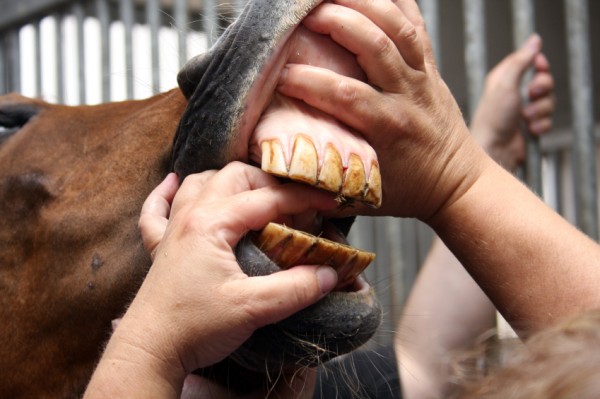
You say that he’s up-to-date on his deworming but if you’ve just been following a rotational deworming calendar and not taking into account fecal egg counts, resistance, and variations due to season and location, then he could still have a parasite issue. Next, make sure his teeth are in good shape by hiring a competent veterinarian or dentist to examine his oral cavity with a full-mouth speculum, remove sharp points and correct imbalances.

If you haven’t had a veterinarian out to look at him yet, schedule a visit right away. A thorough physical examination that may include bloodwork could identify a medical cause for his weight loss. If not, then specific testing may need to be done to pinpoint the problem. Some ambulatory veterinarians are equipped to handle these kinds of detailed diagnostics but others may need to refer you to a clinic or veterinary school teaching hospital.

[Ed. note: from the AAEP Ask a Vet]

Lydia F. Gray, DVM MA, currently serves as the Medical Director/Staff Veterinarian for SmartPak Equine. Prior to joining SmartPak, Dr. Gray served as the first-ever Director of Owner Education for the American Association of Equine Practitioners. She has authored numerous articles in publications such as The Horse, Horse Illustrated, Western Horseman and a variety of veterinary journals and magazines. Dr. Gray is also a frequent speaker at horse expos, veterinary conventions and other locations. After graduating with honors from the University of Illinois College of Veterinary Medicine and receiving her Master's Degree in Interpersonal and Organizational Communication, she practiced at the Tremont Veterinary Clinic for several years. Dr Gray is active in the American Veterinary Medical Association and Illinois State Veterinary Medical Association and enjoys training and showing her trakehner Newman in her spare time. Find Dr. Gray on Google+: Find Dr. Gray on Google+

Posted in Misc. Topics
9 comments on “Rapid Weight Loss in Horse
  1. Sharon says:

    I had a big gelding with this same problem, we stalled him and he absolutely soaked his stall as in standing in urine in one day. Turned out he had a bladder infection and was dehydrating. Gave him penicillin for a few days and 6 crushed aspirin in white corn syrup mixed in with his feed and he was picking up within a week. Just a note we also wormed and checked teeth before we discovered this. My daughters mare recently did the same thing but she was just wormed and teeth were just done. We stalled her and lo and behold flood city. Followed the same regimin and added cranberry juice to her water and it was better within a few days and weight is picking up.

    • Heather Flores says:

      I have a TB gelding that is very hard to keep weight on, your comment interested me because in my opinion he urinates too much! He will urinate in the cross ties or his pen before I ride and do it again less than an hour later after I’m done riding. I’ve also been on him for several hours at a time and I can tell when he has to go because his performance level and energy dips extremely. I’d venture to say he urinates once an hour or so…is this normal???

  2. sandy says:

    Just something to think about. I am not a vet or even have a horse. But I remember a friend having prob w/ a young horse that never gained weight , up and down. Ended up they put him down and turned out he had a severe ulcer and sand in the stomache.

    just thought I would share, the outcome of a confusing situation.

  3. Emily says:

    This sounds very similar to my gelding. He has 24/7 pasture access, water available at all times, get’s grain with electrolytes twice a day and alfalfa pellets in the morning. He also get’s nearly a bales of grass hay a day soaked so he doesn’t choke. He’s up to date on all vet care, his teeth are done, he’s been treated for ulcers and is now on U-Guard and still is losing weight. All blood work has come back clear, he is free of ulcers and still skinny! He also has recently quit drinking water to the extent that he used to. What could be wrong with him?

  4. Patricia says:

    We just went thru this with a 8 year old QH. He had a few hooks on his teeth the vet took care of that and he is on Caniance Ultra & Ulitmate Finish for top line weight and grown n win for rib weight all made by buckeye feed. In three weeks we put on 63 pounds and now 1 1/2 months later he looks great.

  5. jessica says:

    We also have problems with a Tennessee Walker gelding. I have only had him for 4 months and its been down hill since day 1. He is on full pasture and water. I only stall to feed i have been mixing cracked corn and rice bran and increased his feed by 2 lbs per feeding. His teeth are fine and up to date but trying to get a vet to come out is like pulling teeth! So i’m eliminating one thing at a time. Maybe i should stall him and monitor water very closely. You can also increase the protein in the feed and you would be amazed at what it can do to a recovering horse.

Leave a Reply

Your email address will not be published. Required fields are marked *

*

You may use these HTML tags and attributes: <a href="" title=""> <abbr title=""> <acronym title=""> <b> <blockquote cite=""> <cite> <code> <del datetime=""> <em> <i> <q cite=""> <strike> <strong>